
The Future of Beauty Merchandising: 4 Trends Every Beauty Brand Needs to Know in 2026
Consumers no longer discover beauty brands in store.
By the time someone walks into Boots, Selfridges or Space NK, they've probably already seen your product on TikTok, watched a creator review it, searched Google (or increasingly AI), compared prices and formed an opinion.
That changes everything.
The shelf is no longer where discovery begins. It's where purchase decisions are validated.
For beauty brands, this means merchandising has a much bigger job than simply getting noticed. The best displays don't just hold products; they stop shoppers, educate them, reassure them and create memorable brand experiences.
In our latest webinar, The Future of Beauty Merchandising, we explored the biggest changes shaping beauty retail in 2026 alongside the team at Valley, experts in creating great retail experiences.
Below are four trends every beauty brand should understand, and four case studies that show exactly what great merchandising looks like today.
Watch the full webinar below to see all of the examples, including H Beauty, Selfridges, Space NK, Rhode, The Ordinary, Boots × Anya Hindmarch and more.
1. Experience Over Just Exposure
For years, merchandising was largely about visibility.
Get the best shelf.
Secure the gondola end.
Win the promotional space.
Today, simply being seen isn't enough.
Consumers are overwhelmed with marketing messages before they even enter a store. Physical retail now has a different role, it needs to provide reassurance, education and an experience that can't be replicated online.
The most successful retailers are investing heavily in:
immersive pop-ups
live demonstrations
educational experiences
services and events
social-media-worthy moments
Brands such as Rhode, The Ordinary, Selfridges, H Beauty and Space NK are all showing that retail theatre creates significantly more engagement than traditional promotional displays.
Rather than asking "How do we get seen?" brands should be asking:
"What gives someone a reason to stop?"
We explore each of these examples in more detail throughout the webinar.
2. The Rise of the "Phygital Shelf"
Shopping no longer happens in one place. Consumers move seamlessly between:
TikTok
Instagram
AI search
Google
retailer websites
physical stores
The best merchandising recognises that journey. Displays are becoming connected experiences rather than static fixtures. We're seeing far greater use of:
QR codes
creator content
educational videos
digital product information
interactive displays
smarter navigation
As AI increasingly influences purchasing decisions before shoppers reach store, education at the shelf becomes even more important.
Retail displays should continue the conversation, not just start it.
3. Retail Space Must Work Harder
Not every brand has the budget for flagship activations. Most beauty brands have to win from a single shelf, a bay or a relatively small footprint.
The encouraging news? Size matters far less than strategy. Great merchandising comes from understanding shopper behaviour. That means focusing on:
stronger messaging
clearer navigation
better fixture design
reducing shopper overwhelm
increasing dwell time
A thoughtfully designed one-metre fixture can outperform a much larger installation if every element has been designed around how customers actually shop.
The webinar includes examples showing exactly how brands are achieving this.
4. Collaboration Creates Cut-Through
One of the strongest trends we're seeing isn't actually about displays. It's about partnerships.
Consumers increasingly move between beauty, wellness, fashion and health without thinking in traditional categories. Brands that collaborate create:
earned media
wider audiences
stronger storytelling
retail excitement
cultural relevance
The best collaborations don't feel forced. They create genuine conversations that shoppers want to share.
Examples such as Boots × Anya Hindmarch demonstrate how unexpected partnerships can completely transform a retail experience.
Case Study 1: Shark Beauty: The Smart Display
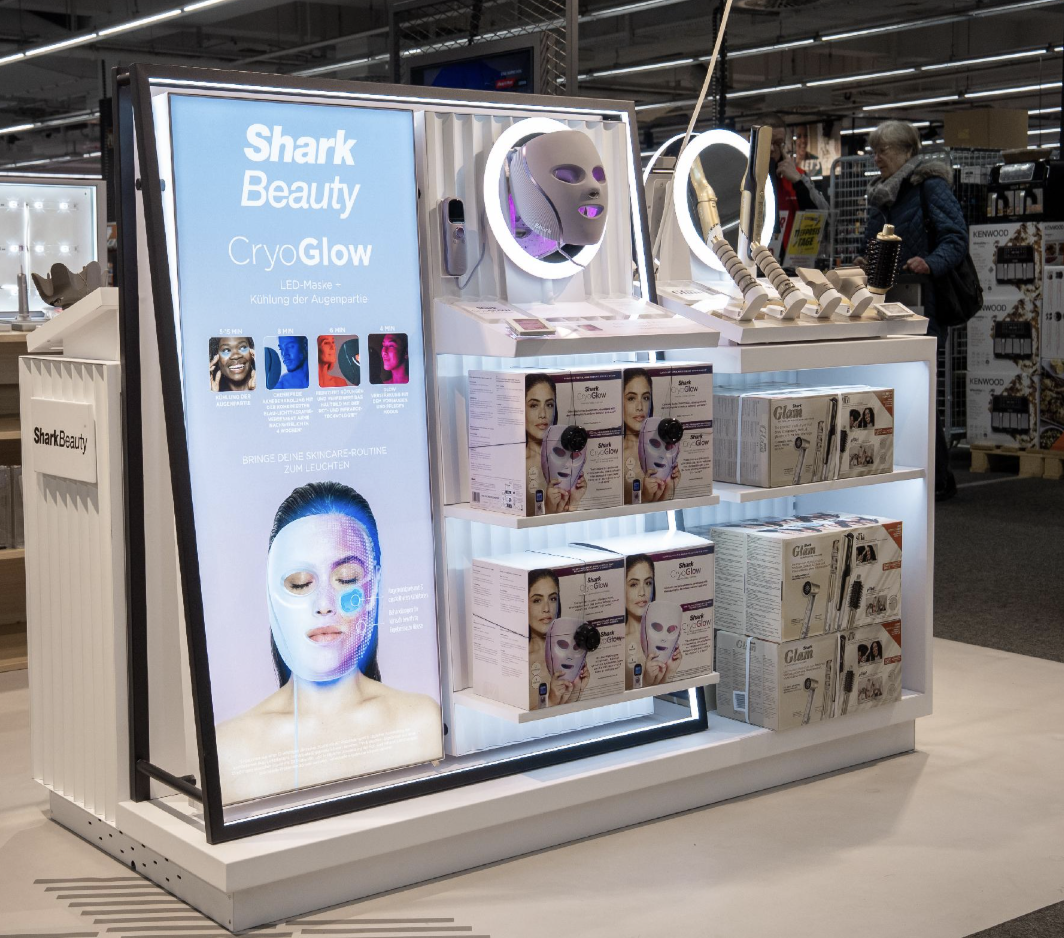
Shark Beauty smart display by Valley
One of the standout examples from the webinar comes from Shark Beauty. Rather than treating merchandising as a static fixture, Shark has created a display that actively learns from shopper behaviour.
Using smart technology, the display can measure:
which products shoppers pick up
how long they spend at the fixture
where they interact most
which messaging performs best
Instead of relying on assumptions, merchandising becomes something brands can continually improve using real customer data.
For premium beauty products, where education is often essential, this creates a far better shopping experience while also providing measurable return on investment.
During the webinar, Valley explains exactly how these displays work and why they're changing the future of retail merchandising.
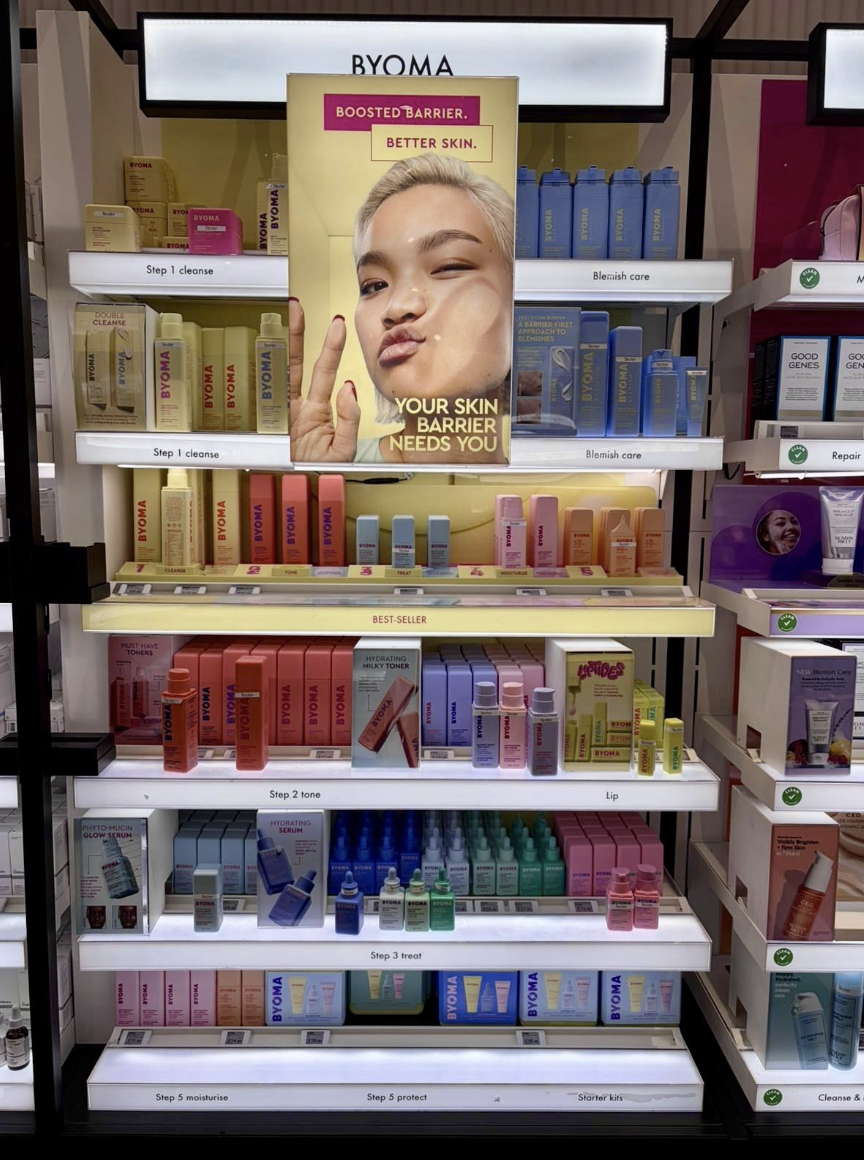
Byoma fixture by Valley
Case Study 2: Byoma: Making Small Space Feel Big
Byoma proves that you don't need a huge footprint to create standout. The fixture succeeds because every element has been designed around shopper behaviour. It uses:
bold colour blocking
simple navigation
clear product hierarchy
educational messaging
routine-led merchandising
Rather than overwhelming shoppers with information, it makes decision-making easier. It's a brilliant reminder that great merchandising isn't about adding more. It's about removing friction.
Holly Haggas from Valley walks through exactly why this fixture works during the webinar and shares practical advice that brands of every size can apply.
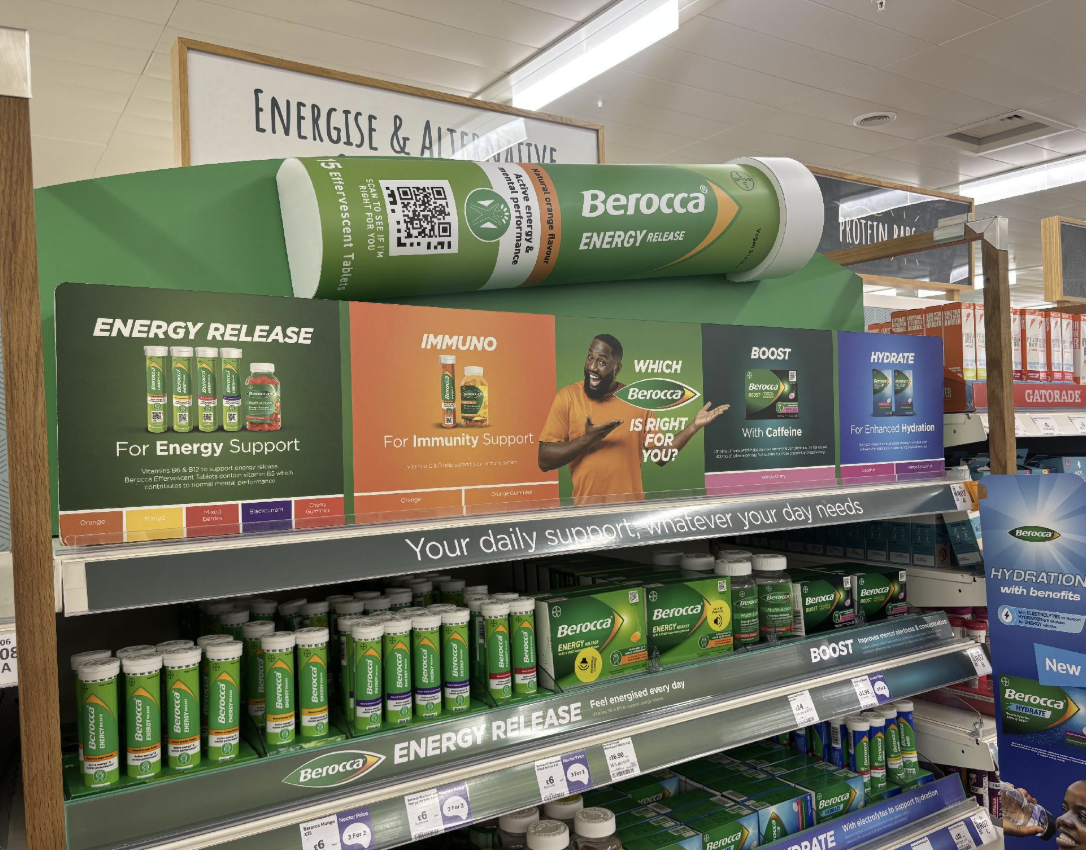
Berocca in Sainsbury's by Valley
Case Study 3: Berocca – Looking Outside Beauty For Inspiration
One of the biggest mistakes brands make is only looking at competitors within their own category.
Some of the most innovative merchandising today is happening elsewhere.
The Berocca activation in Sainsbury's is a great example.
The display disrupts a busy aisle by:
breaking shopping autopilot
simplifying a complex category
improving navigation
using visual communication rather than excessive messaging
The lesson?
Innovation often comes from outside your category.
Beauty brands can learn a huge amount from FMCG, grocery, technology and fashion.
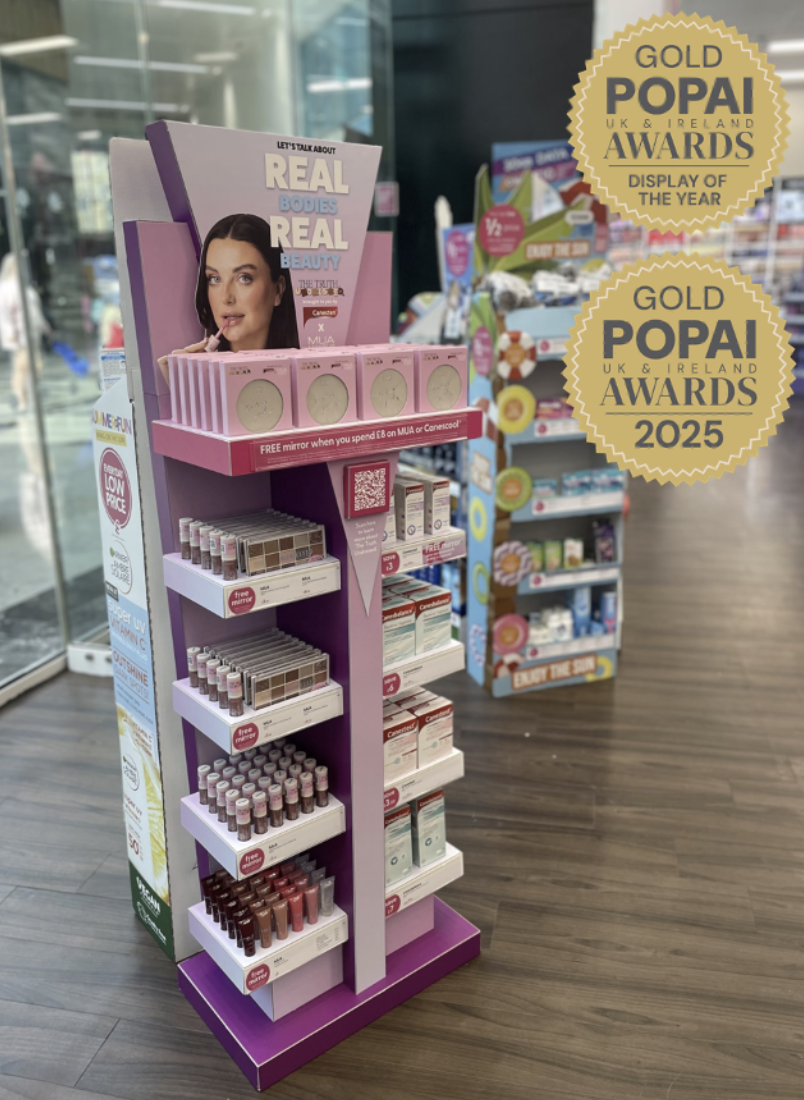
Canesten × MUA by Valley
Case Study 4: Canesten × MUA – Collaboration as merchandising
One of the most interesting collaborations we've seen recently brought together beauty and women's health. The Canesten × MUA partnership did much more than generate publicity. It:
reached new audiences
opened conversations around female health
strengthened relevance for both brands
created stronger storytelling in store
Consumers don't shop neatly within categories anymore. They move naturally between beauty, health and wellness. Brands that recognise this and build partnerships around shared audiences have an opportunity to create merchandising that feels genuinely fresh.
During the webinar, Rose Abbott, Head of Brand at MUA, shares what the collaboration delivered from a marketing, retailer and customer perspective.
Four Questions Every Beauty Brand Should Ask
Before investing in your next display, ask yourself:
Does this create a reason for shoppers to stop?
Can someone understand what the product is, why it matters and why they should buy it within three seconds?
Does the fixture feel like an extension of our brand rather than simply somewhere products sit?
Are you looking beyond beauty for inspiration?
If the answer to any of these is "no", there is probably an opportunity to make your merchandising work much harder.
In the full webinar you'll see:
More footage and imagery from each case study
Additional examples from H Beauty, Selfridges, Space NK, Rhode, The Ordinary and Boots × Anya Hindmarch
Expert insight from Valley on how to create fixtures that deliver measurable commercial impact
Practical ideas you can apply whether you have one metre of shelf space or a flagship activation
Because the future of POS isn't Point of Sale. It's Point of Experience.
Watch the webinar replay and discover how to turn your merchandising into a true brand experience.

Valley believes great retail has the power to stop, engage and inspire.
From design, production to installation, Valley creates best-in-class shopper experiences, helping brands stand out in a crowded retail world by connecting with shoppers where it matters most. Find out more HERE
*The webinar and accompanying article were produced in partnership with Valley, who sponsored the webinar and contributed expertise and case studies. All opinions and insights shared are those of the presenters.