
Celebrity Beauty Brands: Why Some Succeed and Others Fail
From Beyoncé and Hailey Bieber to Jennifer Lawrence and Cardi B, celebrity beauty is booming. But as some brands achieve extraordinary growth and others quietly disappear, what can every founder learn about building a business that lasts?
Celebrity beauty is having a fascinating moment.
On one hand, we’re seeing brands close their doors, including Gwen Stefani’s GXVE Beauty, Scarlett Johansson’s The Outset and Drew Barrymore’s Flower Beauty. On the other, Beyoncé’s Cécred is breaking retail launch records, Hailey Bieber’s Rhode has attracted a billion-dollar acquisition deal, and a new wave of celebrities are entering the market.
It’s a stark contrast, and one that raises an interesting question.
If celebrity status, millions of followers and significant marketing budgets aren’t enough to guarantee success, what is?
Having spent over 20 years working in retail, including as Head of Beauty Buying at Selfridges, I’ve seen brands arrive with enormous excitement, become overnight sensations and, in some cases, disappear almost as quickly.
I’ve also seen relatively unknown brands grow into hugely successful businesses because they understood their customer, developed exceptional products and got their commercial strategy right.
Celebrity brands simply amplify the same opportunities and challenges that every beauty business faces.
And I think there are some important lessons here, whether you’re launching your first product, scaling an established brand or looking for your next phase of growth.
Fame can launch a brand. It can’t guarantee its future.
The celebrity beauty boom has created an interesting shift in the industry.
Historically, building brand awareness could take years of investment in PR, marketing, retail relationships and customer acquisition. A celebrity can shortcut much of that process.
An engaged audience provides immediate reach, potentially lower customer acquisition costs and an enormous opportunity to generate excitement around a launch.
But there’s a fundamental difference between followers and customers.
Just because someone loves a celebrity doesn’t mean they want to buy their skincare, haircare or make-up. And even if they purchase it once, what makes them return?
The recent closures demonstrate just how challenging this can be.
Gwen Stefani’s GXVE Beauty launched in 2022 with an instantly recognisable founder, a strong personal beauty identity and distribution through Sephora. Yet the business ceased operations in 2026.
Scarlett Johansson’s The Outset, which launched in the same year, announced it was winding down in September 2026. Drew Barrymore’s Flower Beauty closed in 2025 after more than a decade in business.
These were not unknown founders trying to establish themselves without an audience.
They had fame, credibility and access to significant opportunities.
We don’t know all the internal commercial factors behind their closures, and it would be too simplistic to attribute them to one issue. But they demonstrate that awareness and distribution alone don’t create a sustainable business.
The question isn’t simply how many people you can persuade to try your product. It’s how many will buy it again, recommend it and choose it over the competition.
This is something I’m particularly passionate about when working with founders. There’s often enormous energy and investment around acquiring new customers, but not always enough focus on what happens afterwards.
The most valuable customers aren’t necessarily the ones you acquire during a high-profile launch. They’re the ones who continue to support your business long after the initial excitement fades.
The new celebrity haircare boom: Why now?
Haircare is becoming one of the most interesting battlegrounds in beauty.
We’ve seen established names such as Jennifer Aniston’s LolaVie, Tracee Ellis Ross’s Pattern Beauty, Rihanna’s Fenty Hair and Beyoncé’s Cécred joined by a new generation of celebrity-led brands.
In October 2026 alone, Jennifer Lawrence launched mes°, Cardi B expanded Grow-Good into physical retail, and Mel B revealed plans for her forthcoming curl-focused brand MPWR.
But I don’t think we’ve reached saturation in terms of consumer demand.
The market is crowded with brands, not necessarily with compelling solutions.
Consumer expectations around haircare are changing.
Hair is increasingly being treated with the same level of consideration as skincare. Customers are interested in scalp health, thinning, hair density, preventative care, ingredient performance and products designed for their particular hair needs.
At the same time, we’re seeing demand for simplified routines, multifunctional products and a more personalised approach to beauty.
The opportunity isn’t simply to launch another shampoo and conditioner. It’s to understand where consumer behaviour is moving and develop products that solve an unmet need.
Several of the newest celebrity launches are particularly interesting when viewed through this lens.
Beyoncé’s Cécred: Authenticity meets product development and retail strategy
Beyoncé’s Cécred is a great example of how a celebrity brand can build a credible connection to its category.
Beyoncé’s personal relationship with haircare stretches back to her childhood and her mother’s experience running a hair salon.
That heritage gives the brand an authentic story, but importantly, the business has also invested in product development, hair performance and a distinctive identity.
Its UK launch with Space NK in September 2026 was extraordinary.
Cécred achieved its entire first week’s forecast sales by 1pm on launch day, becoming the retailer’s biggest-ever brand launch.
From my experience as a beauty buyer, that kind of launch performance is hugely exciting. It demonstrates the power of combining consumer demand, marketing momentum and the right retail partner.
But the commercial challenge doesn’t stop when the product sells out.
What happens next?
Can the brand replenish stock quickly enough? Can it maintain the initial rate of sale? How does the retailer convert the launch into consistent sales? And how many customers become repeat purchasers?
These are the questions buyers and commercial teams need to be asking.
I’ve seen brands achieve incredible launch results only to struggle with continuity, stock management or sustaining customer demand.
A successful launch gets you onto the shelf. Consistent sales keep you there.
Jennifer Lawrence’s mes°: Spotting the next consumer shift
Jennifer Lawrence’s new haircare brand, mes°, takes a very different approach.
Launched in October 2026 in partnership with biotechnology company Arcaea, the brand has entered the market with just three multifunctional products.
Rather than encouraging customers to add more steps to their routine, its proposition centres on doing less while achieving better results.
I find this positioning particularly interesting because it brings together several consumer shifts.
Science-backed beauty is becoming increasingly important, but so is convenience. Customers want high-performing products without necessarily spending more time on elaborate routines.
There is also a growing appetite for simplicity as consumers become overwhelmed by the sheer number of products they’re encouraged to purchase.
The partnership with Arcaea adds technical expertise and a credible product-development foundation.
Of course, the long-term success of mes° will depend on whether the products deliver on their claims and whether customers believe the benefits justify the premium price point.
But from a positioning perspective, it’s a clever example of responding to the direction consumer behaviour is heading.
It’s also a reminder of something I regularly discuss with businesses.
You don’t necessarily need more products to grow. You need the right products, for the right customers, with a compelling reason to purchase.
A focused product range can make a much stronger commercial proposition than launching numerous products without knowing which will become your revenue drivers.
Cardi B’s Grow-Good: Why the biggest retailer isn’t always the best retailer
One of the most interesting recent go-to-market decisions has come from Cardi B.
Her haircare brand Grow-Good launched online earlier in 2026, but rather than making its physical retail debut with Sephora, Ulta or another major national chain, the brand chose independent beauty supply stores.
The initial retail partners include stores in the Bronx and Harlem, communities with which Cardi B has a personal connection.
I think this is a smart move.
So many brands approach me with the ambition of getting stocked by major retailers. And while these partnerships can create significant growth opportunities, I always encourage founders to consider why they want to be stocked by a particular retailer.
Is it where their customer shops? Does it align with their positioning? Will the retailer support their growth? And can they make the commercial relationship profitable?
Cardi B’s approach places Grow-Good in an environment that is already relevant to its target customer, where shoppers are actively looking for haircare solutions and where trusted independent retailers have established relationships with their communities.
It also creates an opportunity to learn from a smaller physical retail footprint before pursuing much broader distribution.
Having worked on both sides of the retail relationship, I know how tempting it is to chase the biggest names.
But more distribution doesn’t automatically mean more profit.
Retail expansion brings additional stock requirements, marketing investment, operational complexity and margin considerations.
Choosing the right partners, at the right stage of the business, is far more important than simply increasing the number of stockists.
Mel B’s MPWR: Solving a specific customer problem
Another brand I’m interested in watching is MPWR, the curl-focused haircare brand being developed by Mel B and professional hairdresser Rory McPhee, with a planned launch in spring 2027.
What appeals to me is the specificity of its positioning.
Rather than trying to appeal to everyone, the brand is focused on simplifying healthy curly-hair routines.
Mel B’s own hair journey gives her a personal connection with the category, while McPhee brings professional and technical expertise.
The products are still in development, so it’s too early to judge their performance or commercial success.
But there’s an important lesson in the proposition.
Brands often worry about excluding potential customers by focusing on a specific audience or problem.
In reality, the opposite can be true.
When you try to appeal to everyone, you risk giving nobody a compelling reason to choose you.
One of the most valuable pieces of work I do with businesses is helping them sharpen their positioning, understand their target customers and identify where they can genuinely stand apart from competitors.
In a crowded market, clarity is a commercial advantage.
Rhode and Haus Labs: The importance of knowing when to evolve
Two other celebrity beauty stories highlight the importance of building a distinctive brand and being prepared to rethink the strategy.
Hailey Bieber’s Rhode has become one of celebrity beauty’s standout growth stories.
The brand built a recognisable identity around a focused product range, accessible prestige positioning and a strong relationship with its digitally engaged audience.
It created products customers wanted to talk about, share and incorporate into their everyday routines.
In 2025, e.l.f. Beauty announced an acquisition deal worth up to $1 billion, with Rhode reporting $212 million in net sales over the preceding 12 months.
That’s an impressive example of turning cultural relevance into commercial value.
However, it’s worth distinguishing the valuation of a business from its profitability. High revenue, rapid growth and an attractive acquisition price don’t necessarily tell us how much profit a brand is generating.
Lady Gaga’s Haus Labs provides a different lesson.
The brand originally launched through Amazon before repositioning and relaunching through Sephora, with a stronger focus on product performance, scientific innovation and premium beauty credentials.
The repositioning demonstrated the importance of matching the product, customer experience, marketing and retailer.
It also showed that a celebrity brand can evolve beyond its original proposition.
This is something every business should be willing to consider.
The strategy that gets you through your first year may not be the strategy that takes you through the next five.
Consumer behaviour changes. Retailers evolve. New competitors arrive.
Brands need to keep reviewing where they sit in the market, whether their original point of difference remains relevant and what they need to do differently to continue growing.

The commercial reality: Revenue is exciting, but profit keeps a business alive
This is perhaps the most important lesson of all.
In beauty, we’re surrounded by impressive launch announcements, sell-out products, retail expansion and headline revenue figures.
But what we don’t always see is what’s happening underneath.
The cost of acquiring customers. The investment required to support retail launches. Inventory commitments. Product development costs. Marketing contributions to retailers. The impact of promotions on margins. And, ultimately, whether the business is generating enough cash to support its growth.
A brand can look incredibly successful from the outside while facing significant commercial pressure internally.
This is why I encourage founders to think about profitability as part of their growth strategy, rather than something to address once they’ve achieved scale.
Understanding the economics of each sales channel is essential.
Selling direct to consumers gives brands more control over pricing and customer relationships, but often involves substantial marketing and fulfilment costs.
Wholesale can unlock a much larger audience, build credibility and drive volume, but brings different margins, payment terms and stock requirements.
Neither channel is automatically better.
The opportunity lies in creating the right balance for the business.
There’s also a temptation to keep launching products to maintain excitement. In reality, for many beauty brands, a relatively small number of hero products drive a significant proportion of sales.
The challenge is to maintain innovation and customer engagement while building a commercially sustainable business around products that customers genuinely love.
Growth without a clear route to profitability isn’t necessarily progress.
What every brand can learn from celebrity beauty
You don’t need a famous founder or millions of social media followers to apply these lessons.
In fact, smaller businesses often have an advantage because they can be more agile, develop closer relationships with their customers and respond to changing behaviours more quickly.
For any founder or leadership team reviewing their strategy, I’d encourage them to ask five questions.
1. Are we genuinely different?
Not just in our branding or packaging, but in the value we offer customers. What problem are we solving, and why should someone choose us over an established competitor?
2. Are we aligned with where the consumer is going?
Understanding consumer trends isn’t about jumping onto every new movement. It’s about recognising the changes that matter to your customer and identifying opportunities to innovate before the rest of the market catches up.
3. Have we chosen the right go-to-market strategy?
Whether that’s direct-to-consumer, specialist retailers, independent stores or major national chains, the right distribution strategy needs to reflect the customer, the brand’s positioning and the commercial objectives.
4. Are we building loyalty or simply chasing new customers?
Awareness matters, but repeat purchase, retention and customer advocacy are fundamental to sustainable growth.
5. Is our growth profitable?
Do we understand the contribution of each product and channel? Are we investing in the activities that generate the greatest commercial return? And are we creating a business that can sustain its ambitions?
These questions might sound straightforward, but the answers often reveal some of the biggest opportunities for growth.

Why I’m passionate about helping brands succeed
One of the things I’ve always loved about retail is the combination of creativity and commercial thinking.
During my years as a buyer at Selfridges, I had the opportunity to work with thousands of brands and founders, from emerging businesses bringing something completely new to market to some of the world’s most established names.
I saw how the right positioning, product innovation, customer insight and retail strategy could transform a business.
But I also saw what happened when brands lost relevance, expanded too quickly or struggled to turn initial excitement into sustained sales.
It’s this experience that shapes the work I do today through WIZZ&CO.
I love getting under the skin of a business, understanding the founder’s vision, challenging the assumptions that might be holding it back and identifying the commercial opportunities that can make the biggest difference.
Sometimes that’s about repositioning a brand to connect with an evolving consumer. Sometimes it’s developing a go-to-market strategy, preparing for major retail partnerships or improving the profitability of existing relationships.
Other times, it’s working alongside founders and leadership teams as a strategic sounding board, helping them make clearer decisions, prioritise opportunities and navigate the realities of growing a business.
Having also experienced building a consumer brand myself, I understand how different the reality of running a business can feel from the outside.
There’s nothing quite like combining the perspective of a retailer with the experience of a founder.
And that’s why I enjoy working with ambitious businesses, whether they’re preparing to launch, scaling rapidly or trying to find their next stage of growth.
Because ultimately, I want to see great brands succeed, not simply launch.
The future of celebrity beauty
I don’t believe the celebrity beauty boom is over.
We’re likely to see more launches, new collaborations and further expansion into categories such as haircare, wellness and science-led beauty.
But I do think the market is becoming more selective.
The brands that stand the best chance of lasting success will be those that combine an authentic story with excellent products, a clear identity, a deep understanding of their customers and a commercially sound strategy.
The same applies to every consumer brand, celebrity-backed or otherwise.
Fame can create incredible opportunities, but it doesn’t replace the fundamentals of building a business.
A celebrity might persuade someone to try a product once. It’s the product, customer experience and brand connection that will persuade them to come back.
And it’s the commercial strategy behind all of that which determines whether the business can continue to grow.
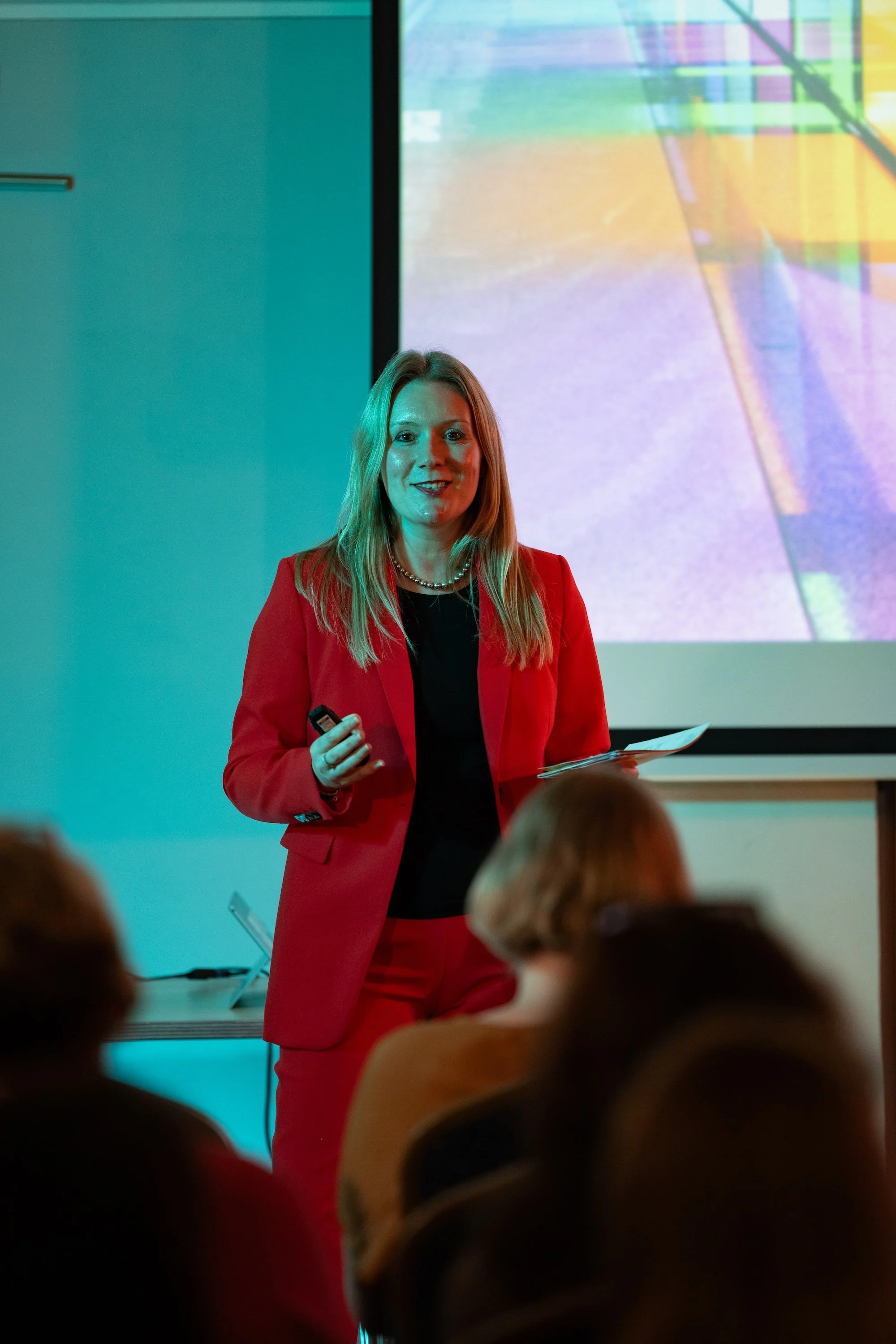
Wizz Selvey is the founder of WIZZ&CO, a retail strategy and consumer insights consultancy helping brands, retailers and founders identify opportunities for sustainable commercial growth. With over 20 years of retail experience, including as Head of Beauty Buying at Selfridges, Wizz works across brand positioning, go-to-market and retail growth strategy, consumer trends and executive advisory.